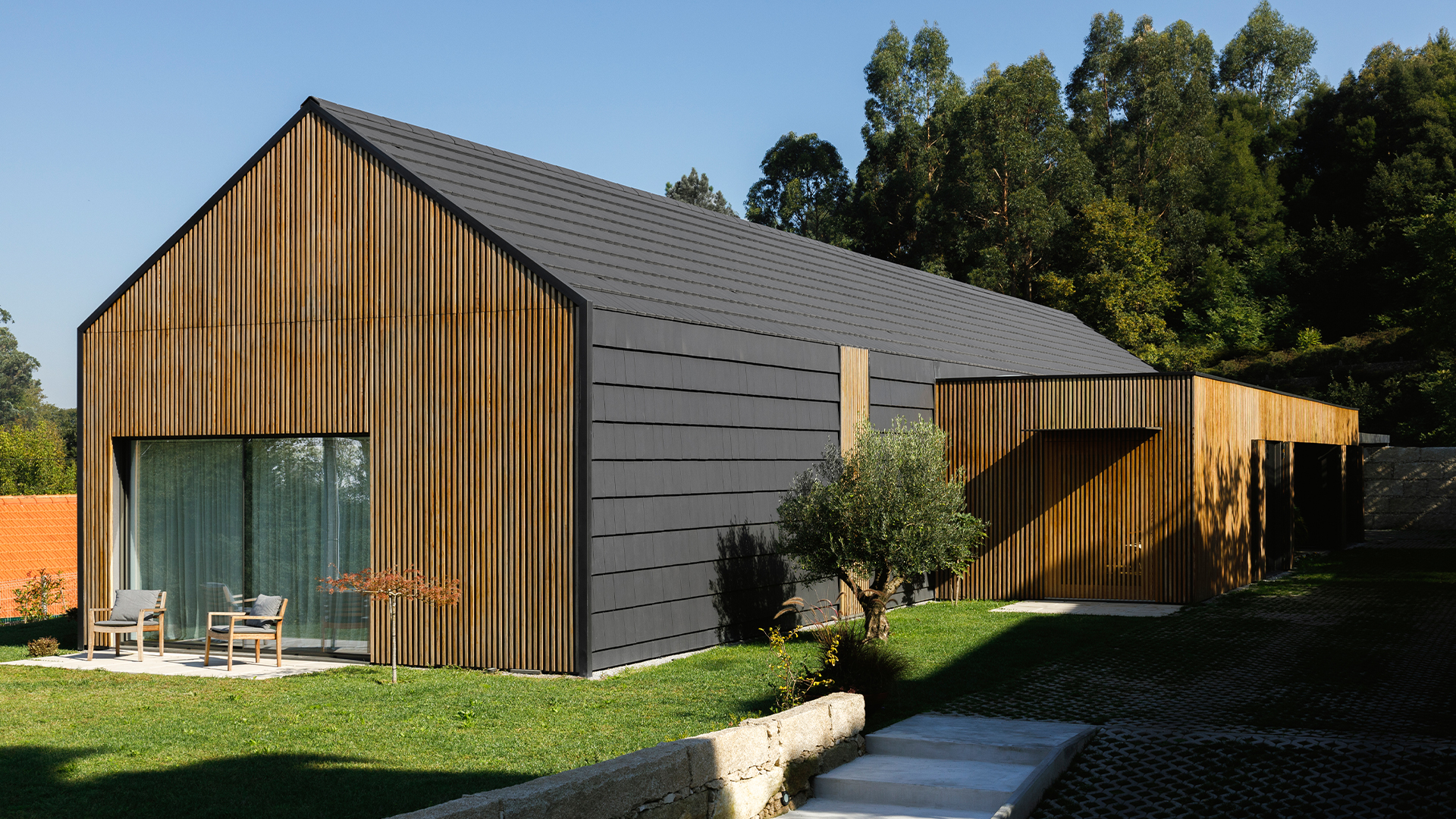

From the road, the house appears atop a small hill — a dark silhouette set in sharp contrast against the surrounding landscape — offering broad views over Santo Tirso. Its simple lines reinterpret the archetype of the traditional Portuguese house, with its pitched roof.
An axis running northeast–southwest was first established along the length of the site, aligned with the finest views. Along this line, the main volume is arranged — a playful reconfiguration of the traditional house, striking…
From the road, the house appears atop a small hill — a dark silhouette set in sharp contrast against the surrounding landscape — offering broad views over Santo Tirso. Its simple lines reinterpret the archetype of the traditional Portuguese house, with its pitched roof.
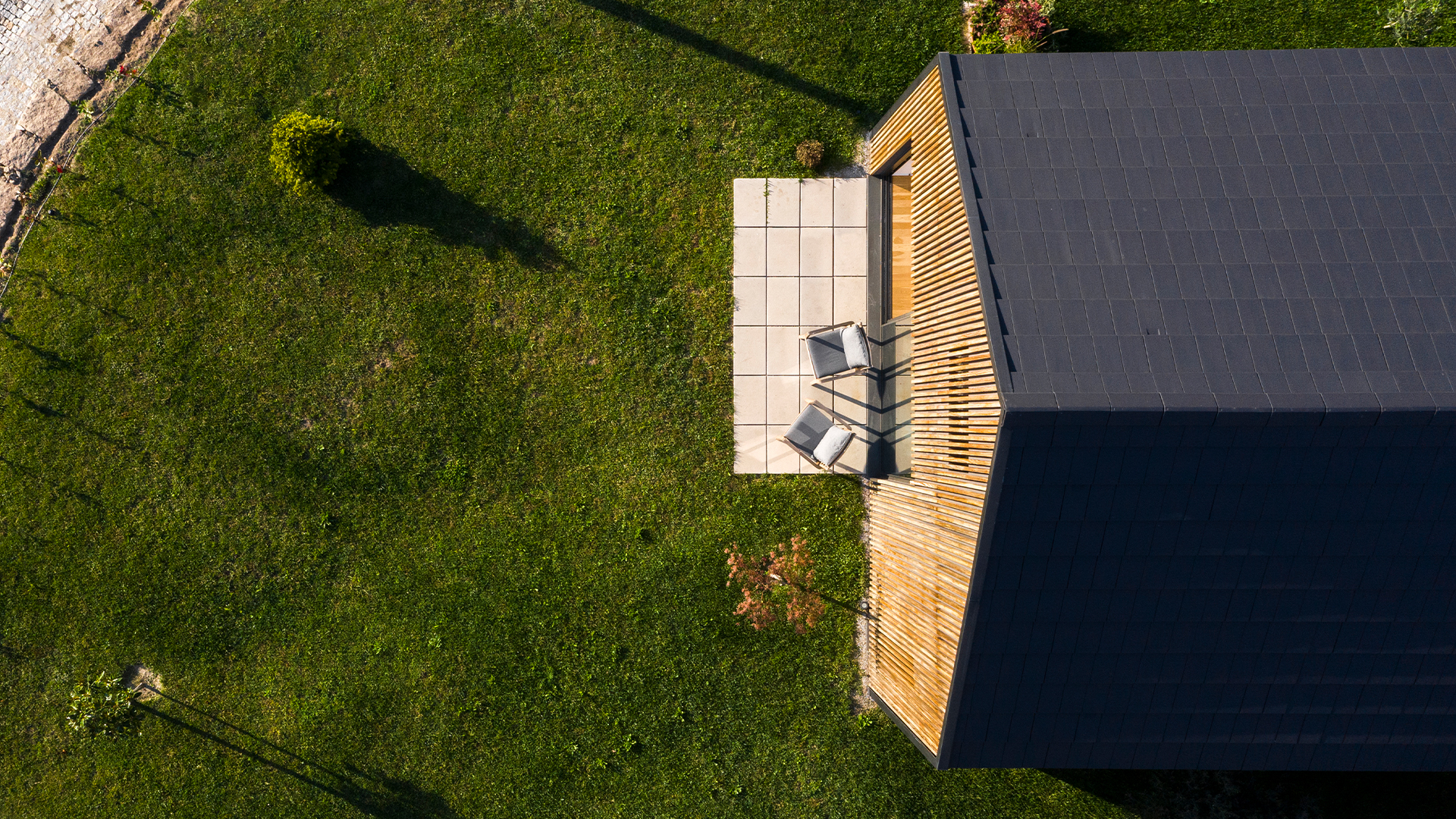
An axis running northeast–southwest was first established along the length of the site, aligned with the finest views. Along this line, the main volume is arranged — a playful reconfiguration of the traditional house, striking within the landscape. A smaller, flat-roofed volume adjoins it, completing the programme while echoing the outbuildings that traditionally grow alongside the main home. This secondary volume is set back from the entrance, creating a sheltered external forecourt.
The clarity of the two volumes allows for an intuitive understanding of the house, gently inviting entry.
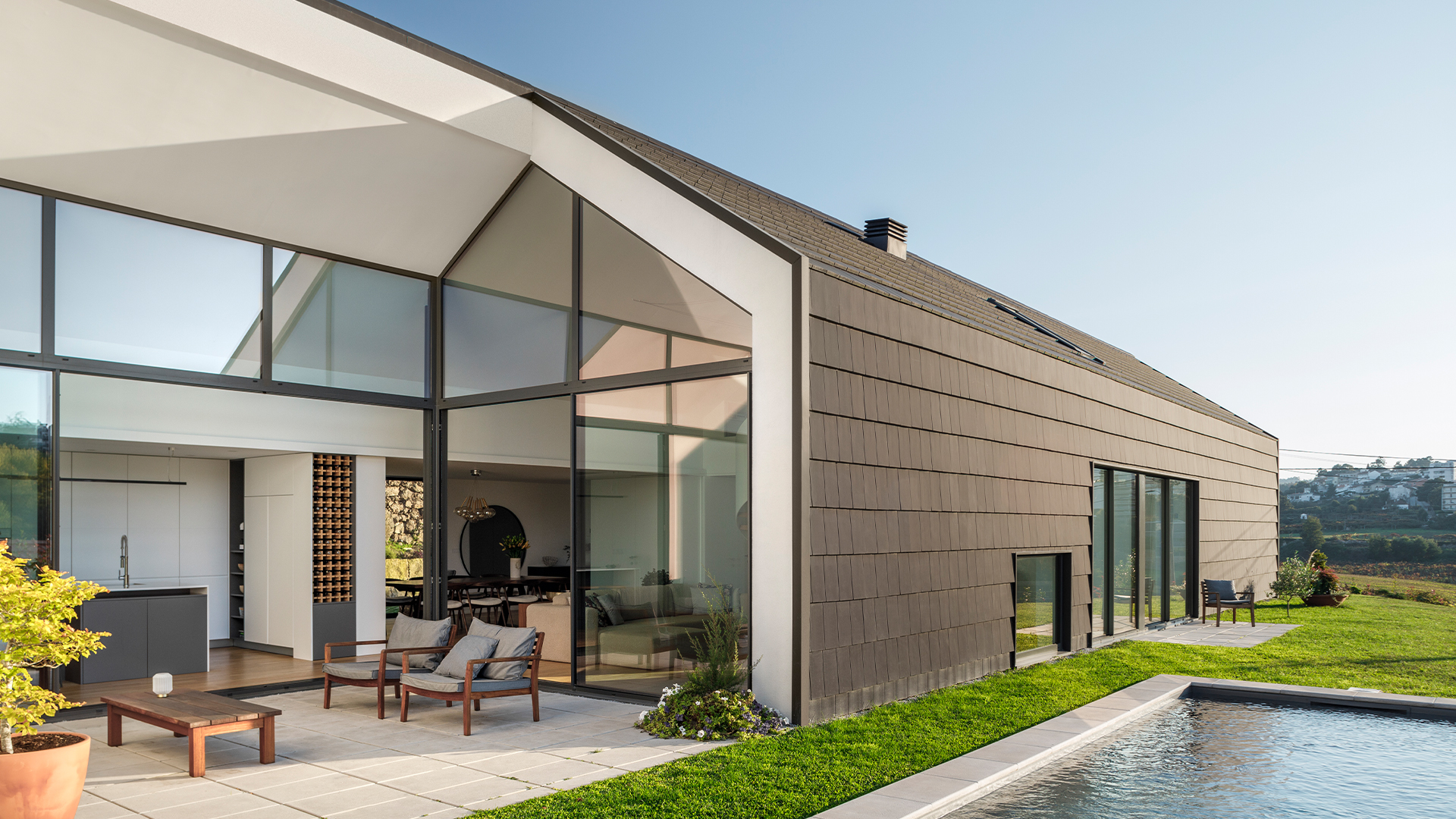
The entrance hall leads into the central living spaces — dining room, sitting room and kitchen — generous, light-filled areas that extend outwards towards the pool and outdoor dining space. Afternoon light animates these interiors, strengthening the dialogue between inside and out.
The central block separates two independent zones. To the southwest lies the private wing, where a corridor serves the bedrooms and a small study, each opening onto accessible outdoor areas through glazed doors, balancing visual and physical connections to the landscape. To the northeast are the technical and working areas, with double-height ceilings.
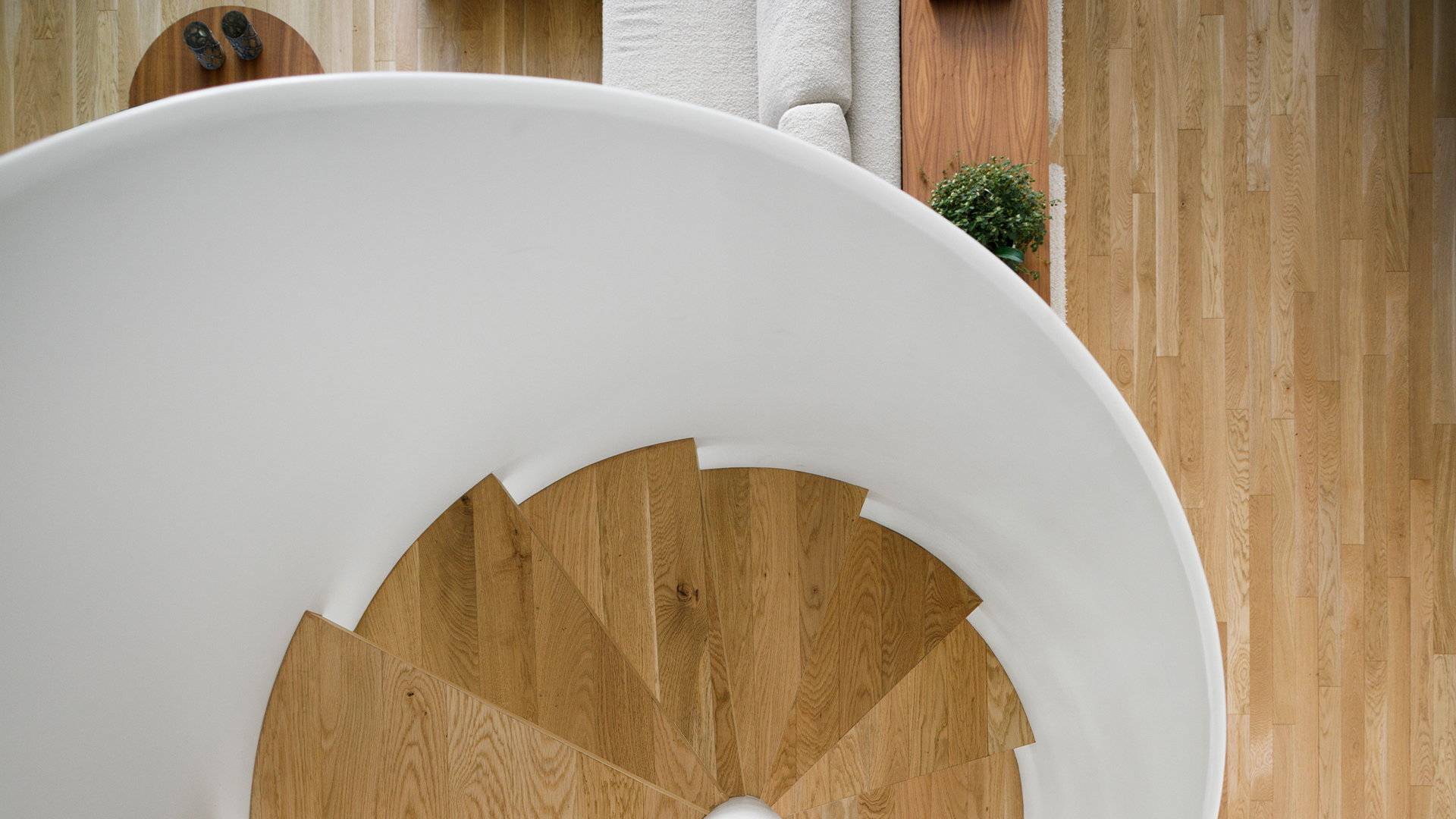
Above these spaces, the pitched roof allows the interiors to be shaped in response to their functions, creating a quiet space for reading and study.
Inside, pale walls and soft, minimalist finishes create an atmosphere of calm. In contrast, the dark exterior — black flat tiles and pine cladding — gives the house a bold graphic silhouette against the landscape.
Through the careful juxtaposition of façade materials, the house draws close to the natural world — to beauty — in the hope that its inhabitants may live here in contentment.